
Farm to Panel: Why Central Valley Ag Businesses are Leading California's Solar Revolution
Why the Central Valley Is Perfectly Positioned for Solar
The Central Valley's geography makes it one of the most ideal locations for solar energy production in the entire country. The region is predominantly flat, eliminating the shading issues and installation complexities that come with varied terrain. More importantly, the Valley receives over 270 sunny days per year, with solar insolation rates that rival the desert Southwest.
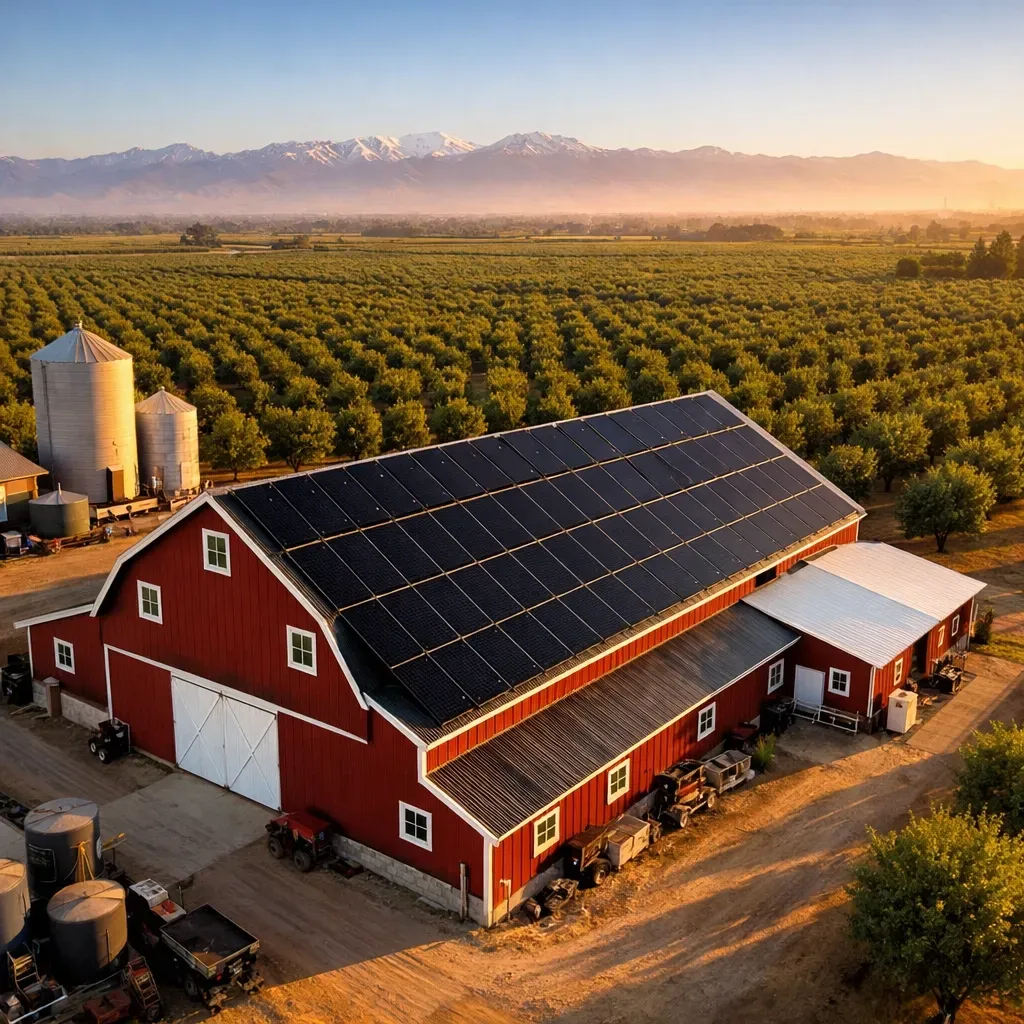
This abundant sunshine translates directly into energy production. A properly sized commercial solar system in the Central Valley can generate consistent, predictable power throughout the year: exactly when agricultural operations need it most. During peak summer months when irrigation demands are highest and utility rates hit their maximum, solar systems are producing at their greatest capacity.
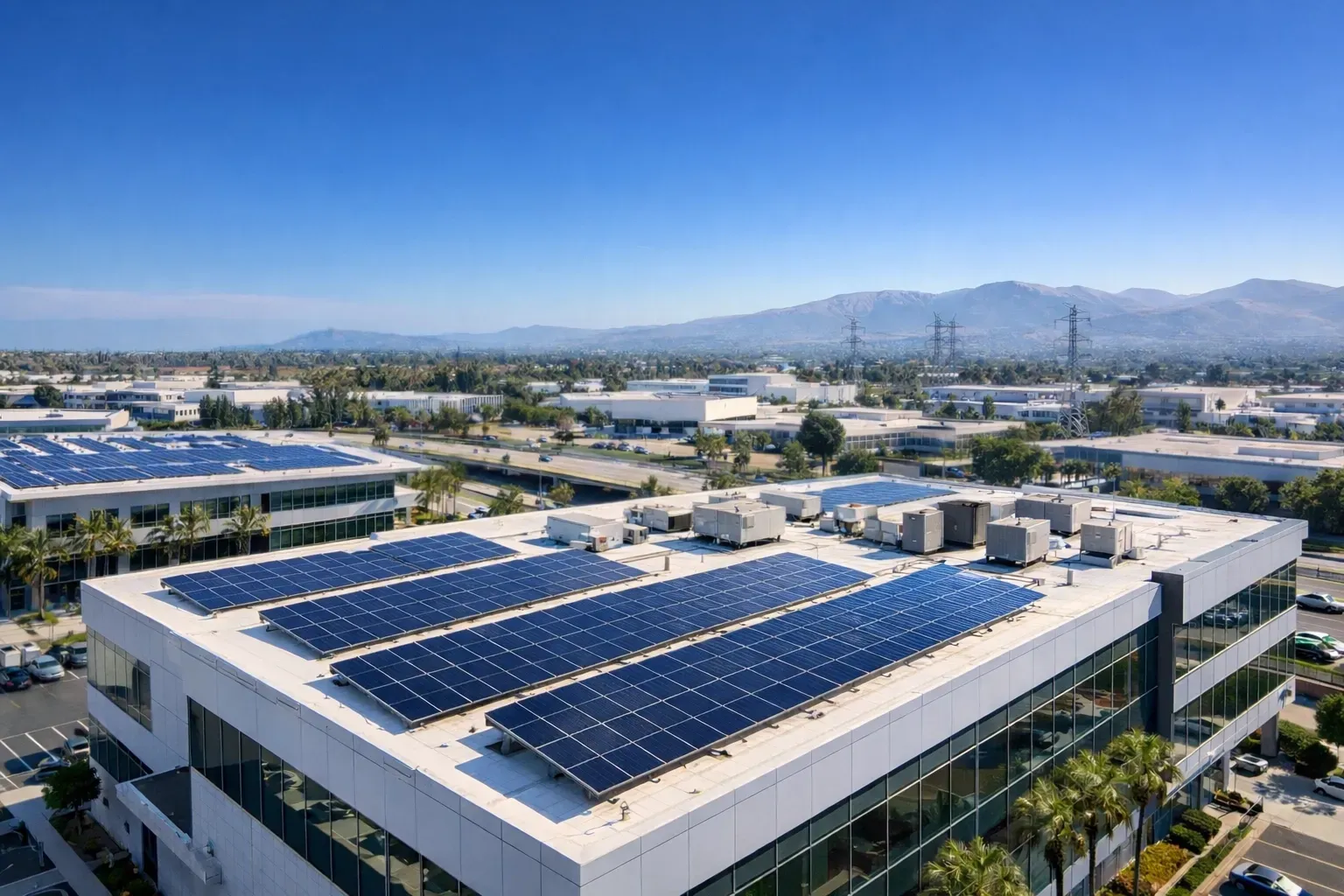
For agricultural businesses with extensive land holdings, solar installations can often be integrated into existing operations without sacrificing productive farmland. Rooftop arrays on barns, processing facilities, and equipment storage buildings provide substantial energy production. Ground-mounted systems can be strategically placed on land that's already been fallowed or on areas with compromised soil quality, transforming underutilized property into a revenue-generating asset.
The Economics That Are Changing Agriculture
The financial case for solar in Central Valley agriculture has never been stronger. Agricultural operations that install commercial solar systems today benefit from the federal Investment Tax Credit, which covers 30% of the total system cost. For a $500,000 solar installation: typical for a mid-sized agricultural operation: that's an immediate $150,000 reduction in net investment cost.
Beyond the upfront incentive, the operational savings compound year after year. Agricultural businesses throughout the Central Valley report reducing their electricity costs by 50-80% after installing solar systems. For an operation spending $60,000 annually on electricity, that translates to $30,000-$48,000 in annual savings. Over a 25-year system lifespan, those savings can exceed $1 million, far outpacing the initial investment even after accounting for the tax credit.
These savings become particularly significant when viewed against the backdrop of California's utility rate structure. Pacific Gas & Electric has increased rates by over 50% in the past five years, and projections suggest continued increases of 5-7% annually. For agricultural businesses operating on thin margins, these rate hikes can mean the difference between profitability and loss. Solar energy locks in predictable energy costs for decades, insulating operations from the volatility that makes long-term planning so challenging.
The return on investment for agricultural solar installations typically ranges from 4-7 years, depending on energy consumption patterns and system size. After reaching payback, every kilowatt-hour generated represents pure savings that flow directly to the bottom line. In an industry where profit margins average just 5-10%, this kind of cost reduction can be transformative.
Energy Independence Means Operational Reliability
For agricultural operations, energy isn't just about cost: it's about reliability. Power outages during critical periods can mean spoiled crops in cold storage, failed irrigation during heat waves, or halted processing operations that result in significant product loss. The Central Valley has experienced increasing grid instability, with planned Public Safety Power Shutoffs during fire season and unexpected outages during peak demand periods.
Solar energy paired with battery storage creates genuine energy independence for agricultural operations. Modern battery systems can provide backup power for critical loads during grid outages, ensuring that refrigeration units continue running, irrigation systems remain operational, and processing facilities maintain production schedules. This reliability has measurable financial value: preventing even a single major loss event can justify the entire investment in solar plus storage.
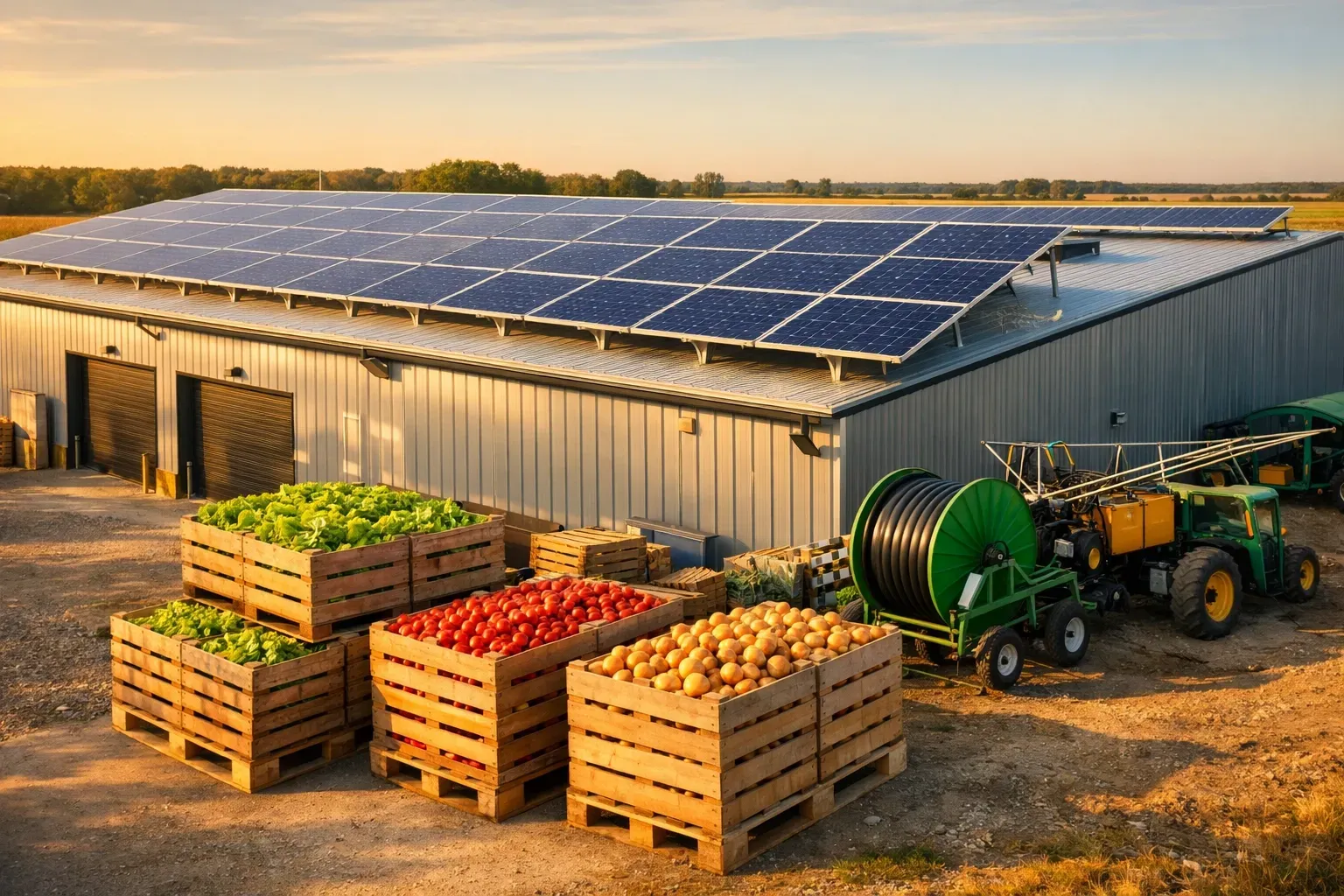
Furthermore, energy independence provides strategic flexibility. Agricultural businesses with solar systems can schedule energy-intensive operations during peak production hours when their systems are generating maximum power, avoiding expensive peak-rate electricity from the utility. This load-shifting capability allows for optimized operations that simply weren't possible when entirely dependent on grid power with time-of-use rate structures.
Environmental Stewardship Meets Business Strategy
The environmental benefits of agricultural solar extend beyond the standard carbon footprint reduction. In a region where water scarcity has become increasingly acute, solar energy offers an alternative land use that doesn't require irrigation. Research indicates that solar installations in the Central Valley could save enough water annually to meet the needs of 27 million people: water that can be redirected to food production or ecosystem restoration.
For agricultural businesses already implementing sustainable farming practices, solar energy represents a natural extension of environmental stewardship. Many operations find that their commitment to renewable energy resonates strongly with consumers, retailers, and corporate buyers who prioritize sustainability in their supply chains. This reputational benefit can translate into preferential purchasing agreements, premium pricing, or enhanced brand positioning in increasingly competitive markets.
The California Department of Food and Agriculture has recognized this connection, offering additional grant programs and incentives specifically designed to help agricultural operations implement renewable energy and energy efficiency improvements. These programs can stack with federal tax credits, further improving project economics for qualifying operations.
Navigating the Solar Transition
Implementing commercial solar for agricultural operations requires careful planning and experienced execution. System sizing must account for seasonal variations in energy demand, future growth projections, and the specific operational patterns unique to each agricultural business. Professional solar installers who understand agricultural operations can design systems that optimize production patterns, account for equipment load profiles, and integrate seamlessly with existing electrical infrastructure.
The installation process for agricultural solar typically involves detailed site assessment, structural engineering for rooftop arrays or ground-mount foundation design, electrical system integration, and utility interconnection coordination. Experienced commercial solar installers handle permitting requirements, utility paperwork, and inspection coordination, ensuring the project progresses efficiently without disrupting ongoing operations.
Financing options for agricultural solar have expanded significantly. Beyond traditional cash purchases that maximize tax benefits, agricultural businesses can access specialized financing products designed specifically for solar installations. These include equipment loans with terms matching system lifespans, sale-leaseback arrangements that preserve capital, and power purchase agreements that require zero upfront investment. The optimal financing structure depends on individual business circumstances, tax position, and cash flow considerations.
The Path Forward for Central Valley Agriculture
The agricultural businesses across the Central Valley that have already made the transition to solar energy are experiencing measurable competitive advantages. Lower operational costs provide flexibility during market downturns. Energy independence creates operational reliability that prevents costly losses. Environmental credentials open doors to premium markets and sustainability-focused buyers.
As utility rates continue their upward trajectory and energy demands remain constant, the financial case for solar energy in Central Valley agriculture will only strengthen. The 30% federal tax credit provides a limited-time opportunity to maximize return on investment, making 2026 an ideal year for agricultural operations to explore solar energy.
For farm and ranch operations throughout Bakersfield, Fresno, and the broader Central Valley, the solar revolution isn't coming: it's already here. The question is no longer whether agricultural businesses should invest in solar energy, but rather how quickly they can implement systems to begin capturing the operational savings and strategic advantages that their forward-thinking competitors are already enjoying.
Ready to explore how commercial solar can transform your agricultural operation's energy costs and reliability? Solar Savings Direct specializes in commercial solar installations designed specifically for the unique needs of Central Valley agricultural businesses. Request a detailed assessment to discover exactly how much your operation could save with a customized solar energy system.


Share On: